Management Approach
The company has established a 'Human Resources Management and Development Policy' to serve as a guideline for managing human resources and promoting personnel potential in support of business operations to achieve the organization's goals as outlined in its vision and mission. The company's practices comply with relevant labor laws, regulations, and international standards, as well as human rights principles, covering the entire process from recruitment, employment, employee care, and development to the end of employment.
Performance 2025
Recruitment and Employment
The company prioritizes transparency and fairness in its recruitment and selection processes, strictly complying with relevant laws and regulations. Human rights principles are fully integrated to ensure equal employment opportunities without discrimination based on age, race, nationality, social status, religion, disability, gender, sexual orientation, gender identity, or political affiliation, with decisions based primarily on knowledge, capability, and suitability for the position. Proactive recruitment is undertaken through various channels to reach qualified candidates, alongside a focus on developing employee potential in key and high-demand fields. In 2025, the company hired a total of 424 new employees.
Local Employment
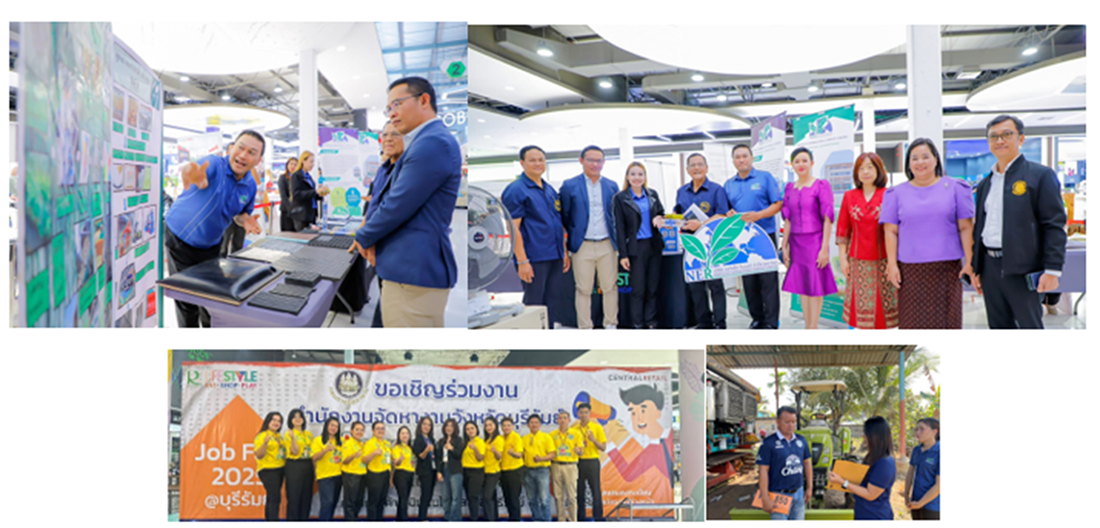
The company has established recruitment and employment policies that focus on providing career opportunities for Thai citizens, particularly local residents of Buriram Province. This initiative aims to improve the community's economy by providing stable income, enabling local individuals to work near their homes and eliminating the need to migrate to other regions for employment. To find suitable personnel, the company utilizes diverse channels, including websites and social media networks. Furthermore, the company participated in and promoted vacancies at the JOB FAIR 2025 organized by the Buriram Provincial Employment Office, and conducted proactive recruitment by visiting communities surrounding the factory to publicize opportunities through community leaders, village heads, subdistrict headmen, subdistrict administrative organizations, the Buriram Provincial Municipality, and a referral program.
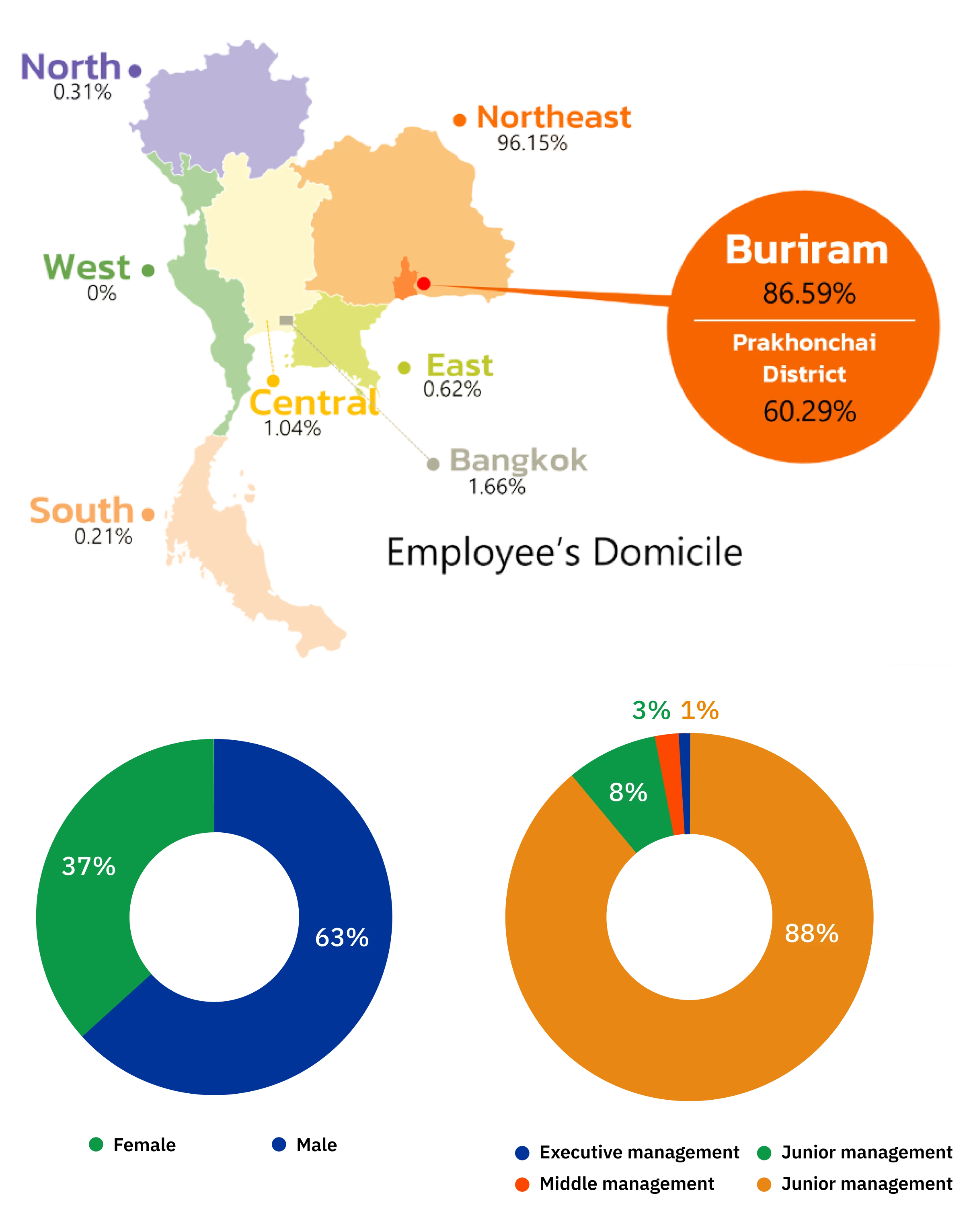
In 2025, the company had a total of 962 employees, 100% of whom were Thai nationals. Among these, 925 individuals, or 96.15% of the total workforce, were domiciled in the Northeast region. The majority of employees were from nearby communities, consisting of 833 individuals domiciled in Buriram Province (accounting for 86.59%) and 580 individuals residing in Prakhon Chai District, where the company is located, representing 60.29% of the total workforce.
Employment of Persons with Disabilities
The company prioritizes the promotion of diversity, equality, and non-discrimination in employment, believing that all employees can contribute to creating organizational value based on their potential, capability, and suitability for the position. Consequently, the company provides opportunities for local persons with disabilities to work in roles that match their skills, capabilities, and individual limitations, with employment considerations based primarily on qualifications, operational performance, and workplace safety. The company arranges supportive work environments and facilities, and assigns tasks corresponding to each individual’s skills, capabilities, and potential. Furthermore, employees with disabilities are treated equally and fairly, matching the standards applied to all other employees.
In 2025, the company employed 11 persons with disabilities domiciled in Buriram Province, accounting for 1.14% of the total workforce. This proportion exceeds the requirements stipulated by the Persons with Disabilities Quality of Life Promotion and Development Act, B.E. 2550 (2007) and its relevant Ministerial Regulations, which mandate that employers with 100 or more employees must hire persons with disabilities at a ratio of 100 non-disabled employees to 1 person with a disability, with an additional person required if the fraction exceeds 50 employees. With a strong commitment to supporting opportunities for persons with disabilities to access stable income, achieve self-reliance, and enjoy an enhanced quality of life, the company provides fair compensation to employees with disabilities based on their position, job level, and responsibilities. The same assessment criteria as general employees are applied, in strict accordance with the policy on equal and non-discriminatory treatment of employees. In 2025, total compensation from the employment of persons with disabilities amounted to 1,553,460.15 THB. Due to its continuous initiatives in local employment for persons with disabilities, the company was honored with an honorary certificate as an “Outstanding Organization Supporting Persons with Disabilities for the Year 2025” for the third consecutive year by the Buriram Provincial Social Development and Human Security Office.
Post-Retirement Employment
Although the company’s work regulations stipulate retirement when an employee reaches the full age of 55, the company recognizes the knowledge, skills, and experience of retiring employees who remain capable of working. Therefore, the company provides opportunities for employees to continue working by establishing a voluntary post-retirement employment policy based on individual readiness. Under this policy, their years of service are counted continuously, and they receive compensation that is no less than what they earned prior to retirement. For employees who do not wish to continue working, they receive severance pay in accordance with the provisions of the Labor Protection Act, B.E. 2541 (1998). In 2025, a total of 10 employees reached retirement age, 7 of whom expressed their desire to continue working post-retirement.
Employee Care
Employees are a vital asset in driving business growth and achieving organizational goals. Acquiring talented personnel requires a significant investment of time and resources for recruitment and development. Retaining employees is therefore of paramount importance, encompassing not only the provision of fair compensation and benefits, but also the cultivation of an organizational culture and a strong focus on employee well-being, enabling them to work at their full potential and thrive within the organization.
The company references and applies international standards, namely ISO 26000 and the CSR-DIW continuous framework, as guidelines for responsible labor management. Emphasis is placed on fair employment and labor relations, working conditions and social protection, social dialogue, occupational health and safety in the workplace, as well as human resource development and on-the-job training. These efforts aim to elevate the quality of life and create a work environment conducive to personal growth alongside the sustainable success of the organization.
Compensation Management
The company provides equitable compensation based on principles of fairness, taking into account job value, position level, responsibilities, knowledge, capability, necessary operational skills, and performance. No differentiation is made based on gender, age, disability, status, or any other factors unrelated to capability and the nature of work, except in cases where the job naturally requires specific personnel based on safety requirements, job qualifications, and job suitability. For pregnant employees, the company strictly complies with labor laws; there is no policy mandating pregnancy tests or contraception for employment purposes, nor is there any forced resignation or unfair treatment due to pregnancy.
In addition to statutory compensation—such as salaries, wages, and social security—employees receive other forms of remuneration, including overtime pay, shift allowances, bonuses, and other benefits according to company criteria. Performance evaluation results at the end of each year serve as the baseline data for compensation management, including annual salary adjustments, annual bonuses, and promotions. They are also used to determine annual outstanding employee awards based on principles of fairness, transparency, and appropriateness regarding knowledge, capability, responsibility level, and performance under clear, non-discriminatory criteria to motivate employees and make them feel valued in their work.
The company has established an employee salary structure by regularly analyzing the job value of each position level and surveying salary structures from external organizations and various data sources. This data is utilized to review and update the salary structure to ensure fair compensation for the job value at each position level, thereby retaining talented employees, attracting high-potential personnel to join the organization, and remaining competitive in the current labor market.
Furthermore, the company monitors the compensation ratio between female and male employees at the same position level to assess pay equity. This information supports the review of the compensation structure to ensure fairness, transparency, and non-discrimination. The comparison is based on the average compensation of female employees relative to the average compensation of male employees at the same position level. Total compensation includes salaries, wages, and other related remuneration according to company criteria, such as overtime pay, special allowances, incentive pay, bonuses, and monetary benefits. Variance in the compensation ratio at each position level may be influenced by the nature of the work, level of responsibility, years of service, specialized skills, performance, and the demographic composition of employees within each group.
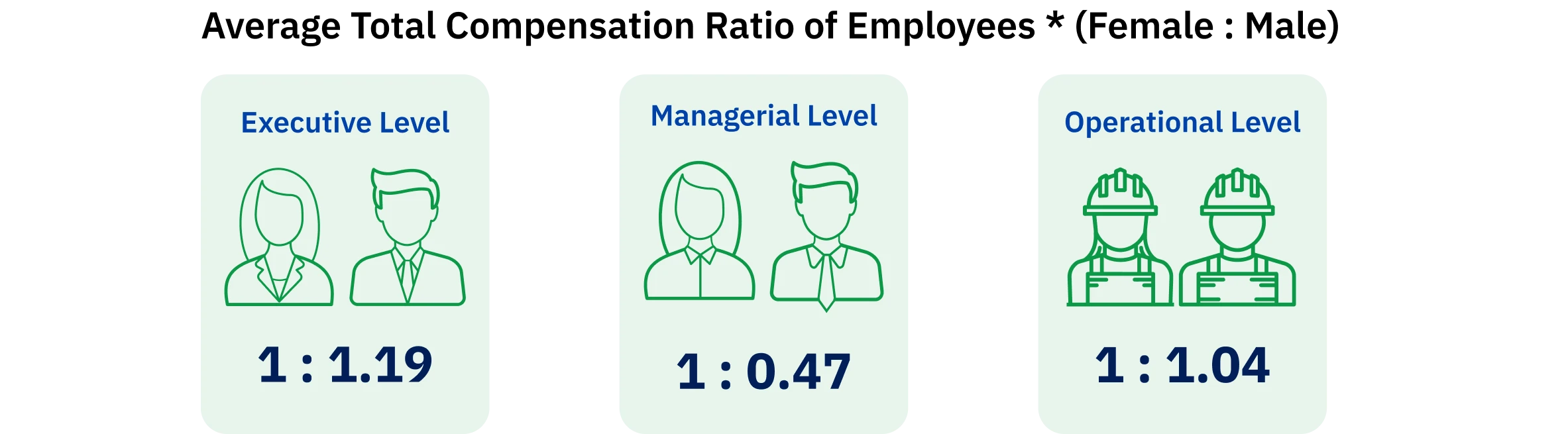
* Female-to-male remuneration ratio calculation is based on basic salary and total variable compensation (e.g., overtime, allowances, bonuses, incentives, and other monetary benefits).
Performance Evaluation
The company has established clear and systematic criteria and methods for evaluating the performance of the Chief Executive Officer, senior executives, and employees. Evaluations are conducted twice a year, and the results of individual performance assessments are used to determine annual compensation. Furthermore, the criteria and methods for performance evaluation are communicated to employees at all levels to ensure transparency. The evaluation method consists of three components, each weighted differently based on the level of the employee, which includes:
- Evaluation Using Corporate Key Performance Indicators (KPIs): The company has established performance indicators aligned with its strategies and objectives, covering business, social, and environmental aspects. This framework allows for the evaluation of the performance of the Chief Executive Officer (70%), senior management (60%), and employees (20%), reflecting appropriate proportions based on the roles and responsibilities at each level.
- Evaluation of Departmental Success (Department Key Performance Indicators): This follows a similar approach to the corporate-level evaluation, using indicators set at the company level to systematically track and measure the performance of each department. This evaluation also assists departments in improving their operational approaches to align more effectively with organizational goals, allocating 20% for the performance evaluation of senior executives and 30% for employees.
- Individual Performance Evaluation: This assessment encompasses expertise, knowledge, competencies, and work behaviors that align with the organizational culture. Evaluation criteria are established to systematically track and develop employee potential, with assessment proportions set at 30% for the Chief Executive Officer, 20% for senior executives, and 50% for employees. This ensures that personnel development at all levels is appropriately aligned with their roles and promotes the overall effectiveness of the organization.
The company has established key performance indicators (KPIs) for the Chief Executive Officer and executive management to align with the company's strategies and goals as follows:
Rights and Benefits
The company provides benefits and privileges to employees in accordance with applicable laws and corporate regulations, covering health, safety, job security, leave, and quality of life. The core benefits include social security, the workmen's compensation fund, annual health check-ups, statutory leave entitlements, financial assistance, and other benefits under company regulations, alongside additional privileges determined by job characteristics and employment categories.
All employees in the company will receive the same benefits across the board, except for vacation leaves, which differ: monthly permanent employees can take vacation leaves without loss of income, while daily or hourly permanent employees do not receive compensation for days off. However, if they work on holidays, they will receive overtime pay at twice their regular daily wage.
Additionally, the company provides a provident fund for monthly-salaried permanent employees to promote long-term savings and financial security post-retirement. Participation in the fund complies with the criteria, qualifications, and conditions specified in the provident fund regulations and company rules. Employees under other employment categories receive rights and benefits in accordance with labor laws and company regulations, but fall outside the scope of participation in the aforementioned provident fund.
The company regularly reviews employee benefits through joint meetings with the Welfare Committee in the Workplace. This committee consists of elected employee representatives who serve as a mechanism to propose ideas, provide consultations, and discuss with the employer regarding benefit provisions and working environment improvements that meet employee needs. In 2025, the company maintained the same Welfare Committee in the Workplace that was officially appointed on July 17, 2024, with a 2-year term of office from July 21, 2024, to July 20, 2026, comprising 13 employee representatives. Furthermore, the company appointed 6 employer representatives to join the quarterly consultative meetings with the Welfare Committee in the Workplace to listen to recommendations and collaboratively consider development approaches.
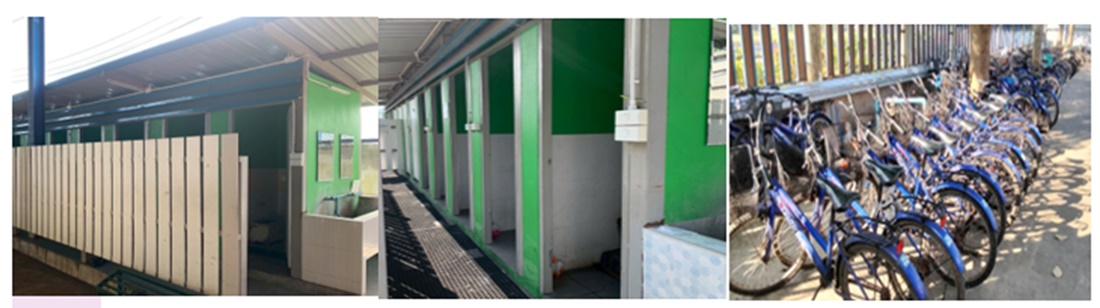
As a result of the meetings between the employer representatives and the Welfare Committee in the Workplace, along with insights from a proactive welfare survey project that allowed employees to express their opinions and reflect their welfare needs, the company considered these recommendations to further improve benefits and the working environment. Consequently, in 2025, the company upgraded employee restrooms and provided a bicycle-sharing system for internal use within the factory grounds to enhance operational convenience and support employee quality of life.
In the event of significant changes regarding personnel policies, benefits, employment conditions, or working arrangements that may affect employees, the company communicates and consults with employees or their representatives appropriately and in a timely manner. This is conducted through internal communication channels, such as meetings with the Welfare Committee in the Workplace, internal announcements, or Human Resources Department channels, taking into account the advance notice period as required by labor laws, work regulations, and company practices.
Promotion of a Good Quality of Life
The company prioritizes the physical and mental well-being of employees at all levels. Accordingly, it strictly complies with labor laws regarding working hours, provides statutory overtime pay, and is committed to enhancing operational efficiency to reduce excessive workloads and working hours that could otherwise pose health risks to employees.
To care for the physical and mental health of its personnel, the company provides annual health check-ups tailored to age groups, job characteristics, and specific risk factors. Medical personnel and a full stock of medical supplies are also available at the workplace 24 hours a day. Furthermore, the company arranges mobile dental check-ups and various activities that promote both physical and mental development. These initiatives include sports competitions with local communities and government agencies, monthly merit-making and almsgiving activities on employees' birthdays, and celebrations during major festivals such as Valentine’s Day, Christmas, and New Year’s Eve. Activities dedicated to strengthening mental resilience are also provided, alongside recreational events that foster unity and a positive workplace atmosphere, such as team-building activities and company trips. These efforts aim to ensure employees experience happiness, maintain a healthy work-life balance, manage workplace stress, and enjoy a psychologically safe environment.
Working Hours and Workload Management
The company prioritizes the physical health and well-being of employees at all levels by strictly complying with labor laws regarding working hours, holidays, leave, and overtime payments. This covers the determination of working hours, approval of overtime, recording of working hours, and the payment of overtime or holiday pay at rates prescribed by law to ensure employees receive accurate and fair compensation. Furthermore, the company is committed to enhancing operational processes to improve efficiency, thereby reducing unnecessary workloads and excessive working hours that could otherwise pose health risks to employees.
Workplace Health Care and Medical Services
The company provides annual health check-ups for employees, taking into account age groups, job characteristics, and specific operational risk factors to ensure appropriate monitoring, prevention, and promotion of employee health. Additionally, the company provides on-site medical personnel and a full stock of medical supplies available 24 hours a day, ensuring employees have immediate access to primary healthcare. Mobile dental check-up services are also arranged to support preventive healthcare and enhance the overall quality of life for employees.
Promotion of Well-Being, Relations, and a Positive Work Atmosphere
The company promotes the physical, mental, and relational well-being of employees within the organization through activities that foster engagement, unity, and a positive working atmosphere. These initiatives include sports competitions with local communities and government agencies, monthly merit-making and almsgiving activities on employees' birthdays, major festival celebrations, team-building activities, and company trips. These activities help strengthen relationships among employees, reduce workplace stress, and enhance organizational engagement. Additionally, the company prioritizes workplace stress management by providing appropriate and confidential channels for employees to communicate their concerns, seek consultation, or report issues that may impact their psychological well-being.
- NER WHITE CLINIC PROJECT
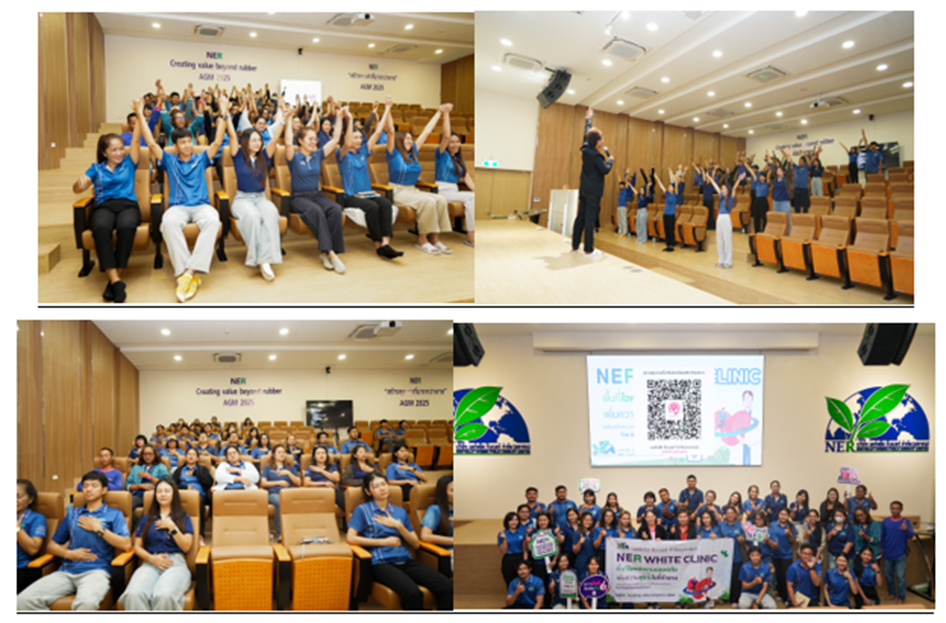
The company implemented the NER WHITE CLINIC project under a workshop titled "Safe Space, Happy Workplace," aimed at enhancing employees' self-awareness, building mental strength, mitigating burnout, and reducing absenteeism caused by mental unreadiness. This initiative helps employees achieve emotional balance and maintain long-term happiness in their work.
Under this project, the company offered employees the opportunity to voluntarily take the mental health assessment developed by the Department of Health. Out of 147 employees who participated, the assessment identified 52 individuals experiencing high levels of stress. Consequently, the company organized a workshop on August 29, 2025, featuring Ms. Parisa Poonyathanakit, a mental health specialist from Prakhon Chai District Hospital, as the guest speaker to deliver systematic mental health knowledge and guidelines. The workshop covered the understanding of mental health, mindfulness regarding thoughts and emotions, mental self-care and healing, cultivating a positive mindset, as well as practical exercises and collaborative knowledge sharing. Following the conclusion of the project, participants showed improved stress assessment results and were able to apply the acquired knowledge to manage stress in both their daily lives and work, which enhanced their operational readiness and boosted the overall organizational efficiency.
Employee Development
The company recognizes the importance of developing the knowledge, capabilities, and skills of its employees to align with changes in the business environment, technology, operational standards, and stakeholder expectations. Consequently, the company has established employee development and training guidelines that encompass technical skills, soft skills (behavioral and collaborative skills), as well as managerial and leadership skills. This ensures that employees can perform their duties efficiently, develop their potential, and advance in their careers alongside the growth of the company.
In determining the employee development and training plan, the company analyzes development needs from three core dimensions as follows:
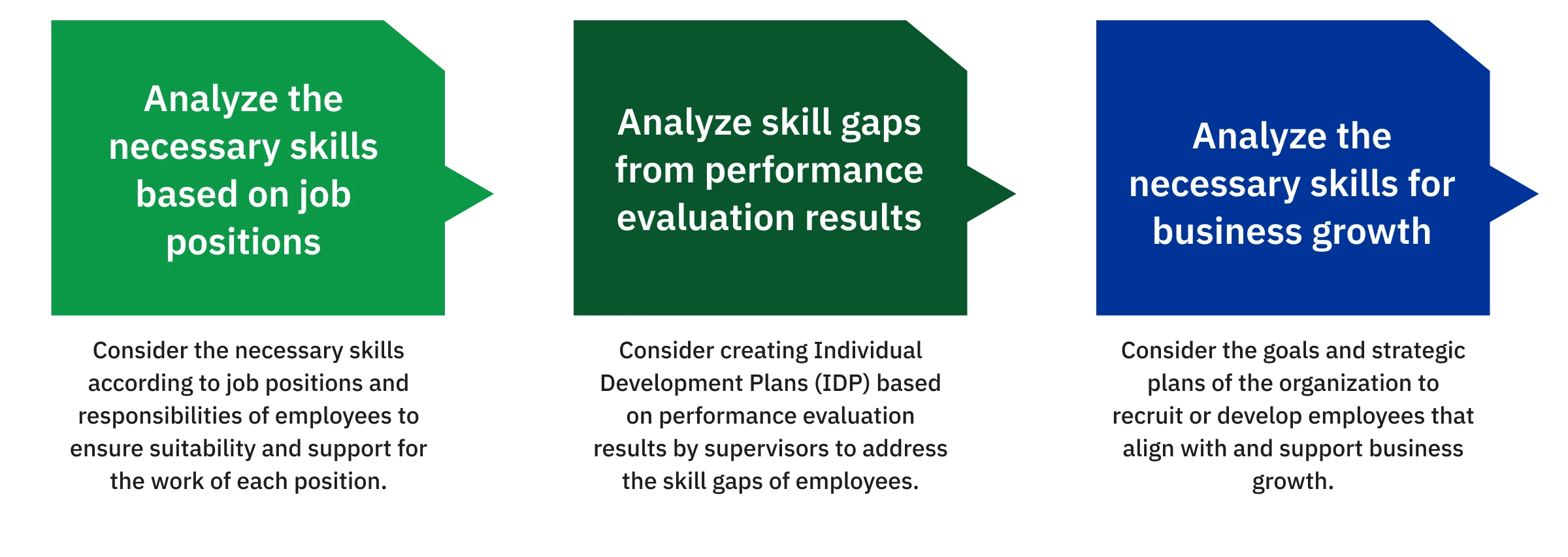
Based on the aforementioned analysis process, the company has established the following employee development and training guidelines:
- Basic Training for Employees: This includes new employee orientation, corporate policies, regulations, employee code of conduct, organizational culture, and anti-corruption.
- Functional and Specialized Skills Training: This includes professional courses, digital technology skills, production technology, environmental management, quality development, and on-the-job training (OJT).
- Statutory and Standard-Compliant Training: This includes training courses on occupational health and safety in the workplace, as well as forklift driving courses.
- Training to Support Business Development and Sustainability: This includes sustainable development, risk management, and courses related to operational efficiency enhancement.
- High-Potential Employee Development and Succession Planning for Key Roles: This includes courses on leadership, management, and skill development for future critical positions.
Employee Training and Skill Development Courses
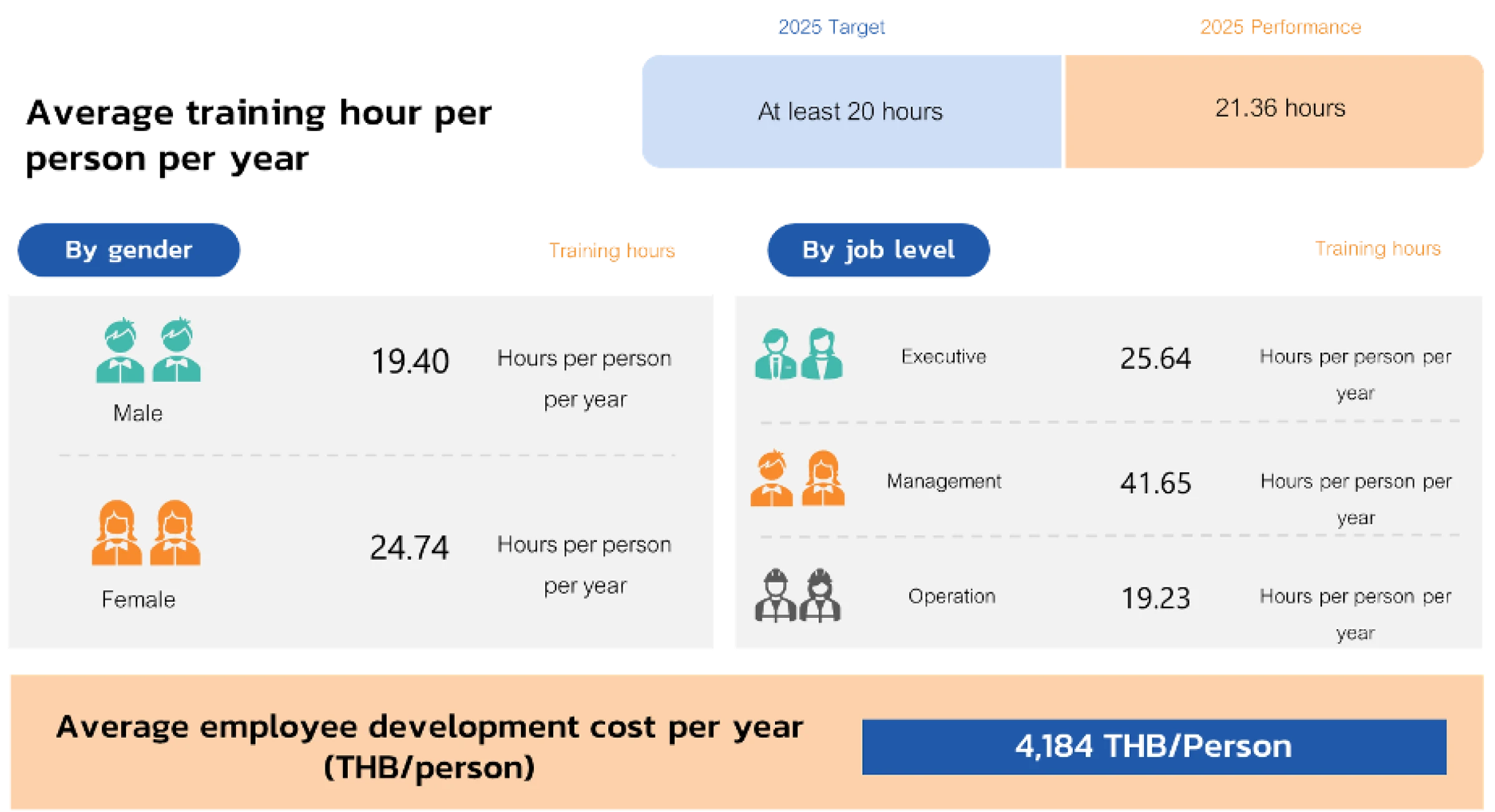
In 2025, a total of 1,002 employees received training during the year, consisting of 62 executives and 940 operational employees. This total covers employees who worked for the company during the reporting period and completed at least one training course, including those whose employment terminated during the year; therefore, this figure may not align exactly with the headcount at the end of 2025. Employees achieved an average of 21.36 training hours per person per year, exceeding the company's established target of no less than 20 hours per person per year. The company invested a total of 4,192,070 Baht in employee skill development, representing an average expenditure of 4,184 Baht per person per year.
• English Proficiency Development Program
This project aims to develop English language skills for employees at all levels to enhance communication and operational efficiency, as well as to support workplace safety. The training is conducted by instructors from the Buriram Skill Development Office 37. The course curriculum focuses on strengthening basic English communication skills, such as greetings, self-introductions, and asking for assistance. It also covers specialized vocabulary related to machinery and production processes, enabling employees to more accurately read operational manuals, safety warning signs, and key job-related documents.
The company organized both basic and intermediate training levels, coupled with practical workshop activities such as role-playing, speaking practices in real-world scenarios, and collaborative group work. These activities encourage employees to gain confidence in using English, apply it appropriately to their operations, and support their future career growth opportunities.
In 2025, a total of 64 employees participated in the project. All participants were required to take both pre- and post-training proficiency tests. To pass the course, participants had to score no less than 70% on the post-test and maintain an attendance rate of no less than 80% of the total class hours. Following the completion of the training, 62 employees passed the criteria, representing 96.88% of the total participants. The remaining 2 participants did not pass due to insufficient attendance hours.
| Course / Program | English Language Proficiency Development Program |
|---|---|
| Employee’s level | All levels |
| Duration | 30 hours |
| Benefits to NER |
|
| Benefits to Employees |
|
• Sustainability Knowledge and Skill Development Program
The company places a high priority on driving business growth alongside environmental and social responsibility. Consequently, it consistently focuses on training and developing employee capabilities regarding sustainability. In 2025, the company organized training sessions to enhance knowledge, skills, and understanding of sustainable operations. This ensures employees can effectively apply this knowledge across Environmental, Social, and Governance (ESG) dimensions in their work, including strategic planning, risk management, corporate operations, and ethical decision-making. The training was conducted by internal speakers for a total of 6 sessions, with 320 employees participating in total.
| Course / Program | Sustainability Knowledge and Skill Development Program |
|---|---|
| Employee’s level | Executive and Operational Levels |
| Duration | October – November 2025 |
| Benefits to NER |
|
| Benefits to Employees |
|
• Thailand Artificial Intelligence Knowledge Development Program 2025
The company arranged for 77 employees to attend the "Thailand Artificial Intelligence Knowledge Development Project 2025," organized by the Royal Society of Thailand. The training was conducted online via Zoom Meeting, with participants gathered together in the company's meeting room from September 10–11, 2025. The objective of this training was to enhance knowledge, understanding, and the application of AI within the company's activities and work processes. It also aimed to prepare the workforce to utilize computers and various company technologies correctly and appropriately, amid a context where AI technology is rapidly transforming the global technological landscape. The training curriculum covered the evolution of AI, its applications in the industrial sector, the potential of AI in driving business growth, organizational adaptation strategies, and the development and ethical use of AI. Consequently, this training helped elevate employee capabilities, strengthen organizational competitiveness, mitigate risks associated with the inappropriate use of artificial intelligence, and support faster, more precise operational efficiency.
| Course / Program | Thailand Artificial Intelligence Knowledge Development Program 2025 |
|---|---|
| Employee’s level | All levels |
| Duration | 12 hours |
| Benefits to NER |
|
| Benefits to Employees |
|
Career Advancement Counseling
The company provides a Mentorship program to support the career development of employees at all levels. Through this program, employees receive guidance and knowledge-sharing from executives, supervisors, or experts from both within and outside the organization. This helps employees better understand their roles and responsibilities, develop essential job skills, and clearly identify their career progression paths. The program primarily focuses on developing skills in management, communication, problem-solving, teamwork, and cross-departmental coordination. Furthermore, it aligns with performance appraisal results and Individual Development Plans (IDPs) to foster continuous learning and prepare personnel for key future positions.
Scholarship Program
The company sponsors continuing education for high-potential employees (Talents) at both the bachelor’s and master’s degree levels to develop specialized skills that can be applied directly to their respective areas of responsibility. Since 2024, a total of 3 employees have been awarded educational scholarships. In 2025, 1 employee received a scholarship to pursue a master’s degree in Modern Management at the Faculty of Management Technology, Rajamangala University of Technology Isan. Throughout 2024–2025, the company provided total financial support for these scholarships amounting to 235,400 Baht. Currently, all 3 scholarship recipients are pursuing their studies while continuing their employment with the company.

“I am deeply proud and grateful that the company has provided me with the opportunity and financial support to pursue my master's degree to develop my potential and advance my career. I am fully committed to utilizing the knowledge and expertise gained to elevate our operational standards and drive greater organizational efficiency in the future.”
Khun Phannee Sripuang Head of Accounts Receivable Section, Accounting and Financial Management Division
Currently receiving a scholarship to pursue a master's degree in Modern Management at the Faculty of Management Technology, Rajamangala University of Technology Isan, Surin Campus.
Talent Development
The company has selected outstanding employees from each department to join the "Talent Pool," with selection based on performance and future growth potential. This selection process was conducted by a committee comprising senior executives, consultants, and human resources representatives. In 2025, a total of 12 employees were selected to participate in a special 12-month training program, which concluded on March 31, 2026.
The company engaged consultants to develop a specialized hybrid learning development plan incorporating both classroom and online sessions, alongside practical application and cross-functional organizational development initiatives under the curriculum titled "Developing Leaders for Sustainable Success." This program was systematically designed to strengthen leadership capabilities across various dimensions, including management agility, strategic thinking, effective communication, and efficient team management.
Promotion and Career Advancement (Career Path)
The company provides opportunities for promotions or transfers to roles that align with employees' knowledge and skills. It supports and encourages employees to demonstrate their potential in various opportunities and continuously develop themselves in their roles and responsibilities. The company has established clear methods and criteria for considering promotions to ensure fairness and transparency while creating career advancement plans for each department. The aim is to support and retain this group of employees while establishing a system to ensure career progression, allowing employees to have job security and grow along with the organization. In 2025, a total of 39 employees received promotions.
Building Employee Engagement
In addition to caring for and developing employees, the company also places great importance on employee feedback and participation, which brings forth creativity, collaboration, and commitment to both work and the organization. The company provides opportunities for employees to engage in decision-making processes, such as participating in committees or working groups on various matters, suggesting improvements to work processes, and expressing opinions through satisfaction surveys or direct discussions with management. This approach encourages employee involvement and significantly reduces the gap between management and staff, making everyone feel included and valued in the organization.
- NER Points Program
This project aims to strengthen employee engagement and encourage participation in various company activities to reduce issues related to information dissemination and enhance the effectiveness of internal communication. The program uses a motivation system based on point accumulation for redeemable rewards, including special days off, employee shirts, insulated cups, camping chairs, and umbrellas. This initiative has been very successful, with 100% of employees in the company participating, totaling 962 participants.
Employee Engagement Assessment
The company places significant importance on assessing employee engagement, as engagement levels reflect trust, pride, workplace motivation, and employees' commitment to driving the organization forward. Regularly measuring engagement helps the company understand the employee experience, identify factors that either support or hinder work, and utilize the insights gained to enhance policies, action plans, benefits, internal communication, the working environment, and employee development approaches.
The company has developed an employee engagement survey tailored to its organizational context, covering key factors such as trust in leadership, pride in the organization, workplace atmosphere, work-life balance, and self-development motivation. The employee engagement assessment is conducted twice a year by the Labor and Human Rights Working Group in collaboration with the Human Resources Department. It is distributed through three channels—the company’s online system, Morning Talk public relations, and direct distribution of physical surveys—to ensure access to all employee groups.
The assessment results are analyzed to identify key priorities for employees, organizational strengths, and opportunities for improvement. These insights are also used to formulate development plans, monitor progress, and report to relevant management in order to continually elevate the employee experience, engagement levels, and human resource management effectiveness.
In 2025, the employee engagement score reached 87.58%, exceeding the established target of 85% and showing an increase from 2024. The assessment categories that received the lowest scores were job characteristics, job security, and career advancement. Consequently, the company addressed these areas for development and improvement by increasing skill and knowledge development through job-specific training, reinforcing understanding of roles and responsibilities for each position, and properly preparing employees for career progression. The results of the employee engagement assessment were communicated to employees through online channels, including the company’s Line groups and emails, as well as being posted on public relations notice boards, and subsequently presented to senior executives and the Board of Directors, respectively.
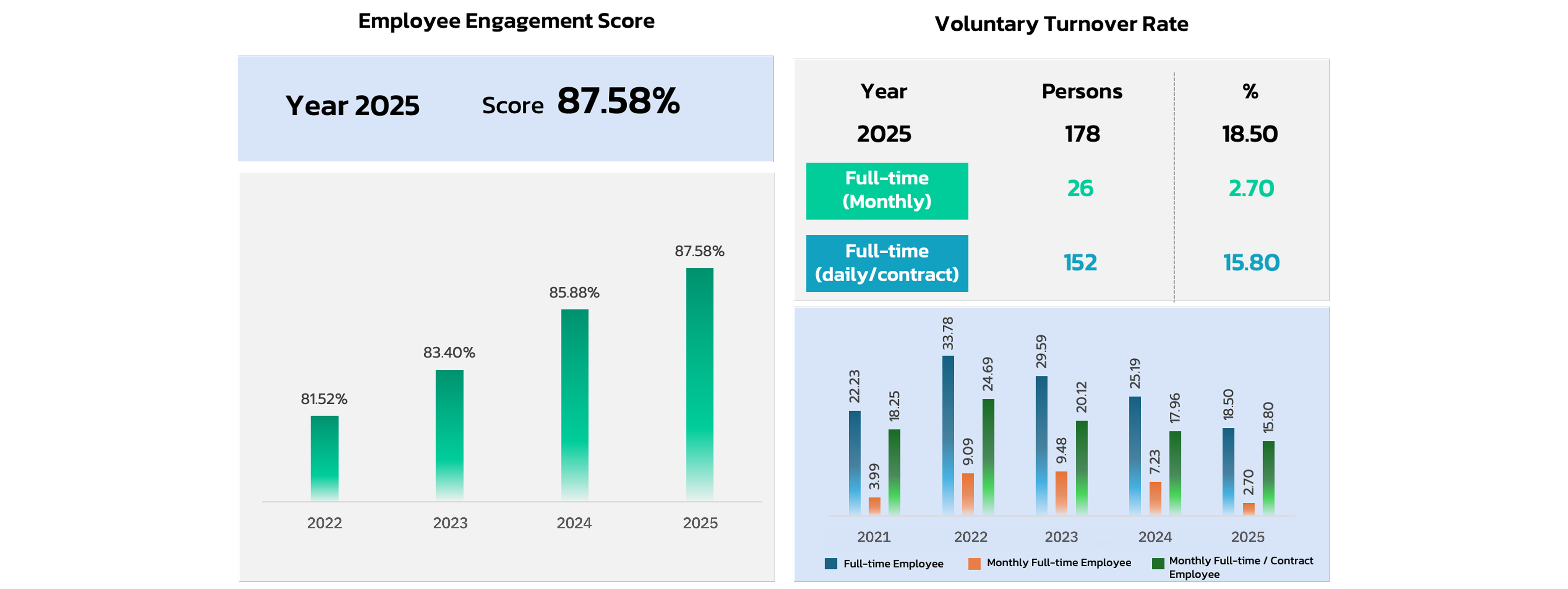
In 2025, the company’s voluntary employee turnover rate stood at 18.50%. When broken down by employment type, monthly-salaried permanent employees had a voluntary turnover rate of 2.70% in 2025, which is lower than the established target of not exceeding 5%. On the other hand, permanent employees compensated on a daily or piece-rate basis—whose job characteristics and employment conditions differ from those of monthly-salaried permanent employees—recorded a voluntary turnover rate of 15.80%. The voluntary turnover rates for both employee groups have consistently declined since 2022. Nevertheless, the company remains committed to continuously improving and developing employee care across all dimensions, fostering engagement, and building stronger employee relationships to retain high-quality personnel as a driving force for the company's future.
The main goals and notable outcomes of the initiatives focused on Employee care, Development and Retention are summarized in the table below.
| Long-term Goals 2030 |
2025 Goals | 2025 Performance |
|
|---|---|---|---|
| Average training hours per employee per year (hours) | Not less then 30 | Not less then 20 | 21.36 |
| Employee engagement score | Not less then 95% | Not less then 85% | 87.58% |
| Voluntary turnover rate* | Not exceeding 2.5% | Not exceeding 5% | 2.70% |
*Exclusively for the voluntary turnover rate of permanent, monthly-salaried employees.