Management Approach
Managing odor and air quality from the production process is a critical factor in earning the trust of surrounding communities, while demonstrating the company’s responsibility toward the environment, health, and quality of life of its stakeholders. Therefore, the company strictly adheres to its Environmental Management Policy, aiming to prevent and mitigate potential air pollution impacts from production processes. It rigorously controls emissions to ensure strict compliance with legal requirements, regulations, and relevant environmental standards, including the Enhancement and Conservation of National Environmental Quality Act, B.E. 2535 (1992), the Factory Act, B.E. 2535 (1992) and its amendments, ministerial regulations and notifications regarding industrial air emission and pollution control, as well as laws governing the control of public nuisances caused by odor, dust, smoke, or air pollution that could affect the health and quality of life of nearby communities.
The ompany is committed to preventing, mitigating, and controlling potential impacts from air pollution and odor generated by the production process. Emphasis is placed on avoiding pollution sources at the origin, enhancing the efficiency of pollution control systems, and monitoring air quality according to scheduled plans and legal requirements. Control and management measures for odor and air quality have been established throughout the production process. These cover reducing the use of chemicals that may source odors or pollution, promoting the use of high-quality raw materials with low contamination, treating air with appropriate technologies, and monitoring air quality from the exhaust stacks of the rubber drying process to evaluate the efficiency of air pollution control systems and provide data for continuous operational improvement. Furthermore, the company supports transparent communication of environmental data to communities and stakeholders.
Environmental management operations are overseen by the Environmental Working Group, chaired by Mr. Ekapong Duang-arch, Environmental Department Manager. The Chairman is responsible for controlling and monitoring operations to align with the company’s environmental policy, collaborating with the Risk Management Working Group and the Sustainability Working Group to ensure comprehensive management of pollution, environmental impacts, and potential future risks.
The company defines its operational strategy as "Control, Maintain, Improve, and Audit," focusing on integrating modern technology and appropriate innovations to boost pollution control efficiency, while promoting employee and community participation in odor and air quality management processes to foster strong and sustainable environmental protection partnerships.

Air Quality Risk Assessment
The company conducts air quality risk assessments for all operational activities by identifying pollution sources and factors that could potentially impact the environment, employee health, and surrounding communities. This assessment covers the production line, rubber drying process, raw material storage, chemical usage, transportation, and related supporting activities. Key areas evaluated include odor, particulate matter (dust), soot, smoke, and airborne contaminants that may arise from operations. The assessment results are utilized to establish appropriate control, prevention, and monitoring measures, ensuring systematic air quality risk management and minimizing operational impacts. Based on these assessment results, the company has established air quality risk management guidelines aligned with the specific characteristics and sources of the air pollutants, implemented through the following key measures:
| Risk Factors | Ongoing Preventive Measures | Additional Preventive and Corrective Measures Implemented in 2025 |
|---|---|---|
| 1. Particulate matter (dust) from production processes emitted through exhaust stacks |
|
|
| 2. Chemicals / Volatile Organic Compounds (VOCs) / odor from production processes emitted through exhaust stacks |
|
|
| 3. Odor emissions from rubber latex transport vehicles |
|
|
| 4. Odor from the accumulation of rubber stack |
|
|
| 5. Odor from wastewater treatment |
|
|
Odor Management and Control
The issue of unpleasant odors arising from rubber business operations is a significant concern that the company pays close attention to and manages diligently. Activities within the operational process, such as transportation, storage of raw materials, production, and wastewater treatment, are all sources of undesirable odors that may impact the environment, the quality of life of employees, and the well-being of the surrounding community. Therefore, to address and minimize such impacts, the company consistently implements air quality control measures outlined for all processes that are sources of odors. The following actions are taken:
Odor Management from Transportation
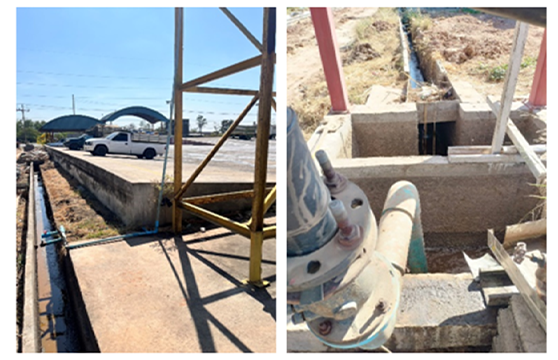
The company is aware of the potential for odor arising from latex leakage from rubber transport vehicles, which may spill onto roads and roadside areas during transportation from rubber plantations to the company's receiving area. Such incidents can lead to both odor issues and road accidents affecting the wider community. Consequently, the company has set conditions for purchasing rubber from its suppliers, requiring that all rubber transport vehicles must be equipped with proper drainage channels and catching tanks for latex according to specified requirements. If any supplier fails to comply with these measures, the company will suspend the purchase or acceptance of rubber for that instance to ensure that suppliers recognize the importance of adhering to the company's conditions, thus reducing the risk of environmental impact on the surrounding community.
In 2025, 100% of the suppliers selling rubber to the company successfully installed drainage rails and containment tanks on their transport vehicles in strict accordance with the company's terms and regulations, while also adhering to the Supplier Code of Conduct and measures requiring suppliers to conduct business with social and environmental responsibility. The company monitored and verified compliance with these requirements by conducting on-site operational audits at partner locations, distributing raw material transport requirement notices for partners to acknowledge and sign, and conducting raw material supplier evaluations through the Procurement Department, which covered environmental and community considerations, particularly the installation and operational readiness of drainage rails on transport vehicles to prevent rubber runoff leakage during transit.
Additionally, the company allocated a dedicated area within its premises to accommodate up to 200 raw material transport vehicles waiting to unload rubber, reducing roadside parking on public streets which could lead to rubber runoff leaking onto the road surface and causing issues related to odor, cleanliness, traffic, and the risk of road accidents. The vehicle holding yard is designed with an integrated drainage rail system to capture all cup lump rubber leachate from the transport vehicles, collecting all leachate to be sent into the company's wastewater treatment system for proper disposal.
Odor Management from Rubber Stack
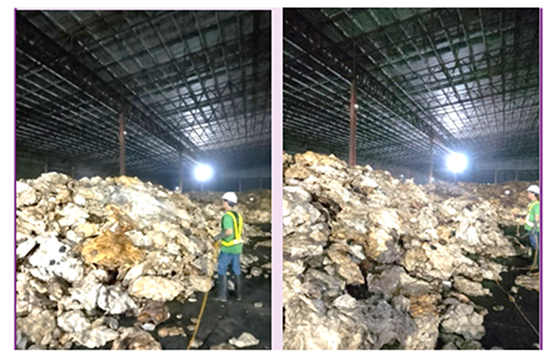
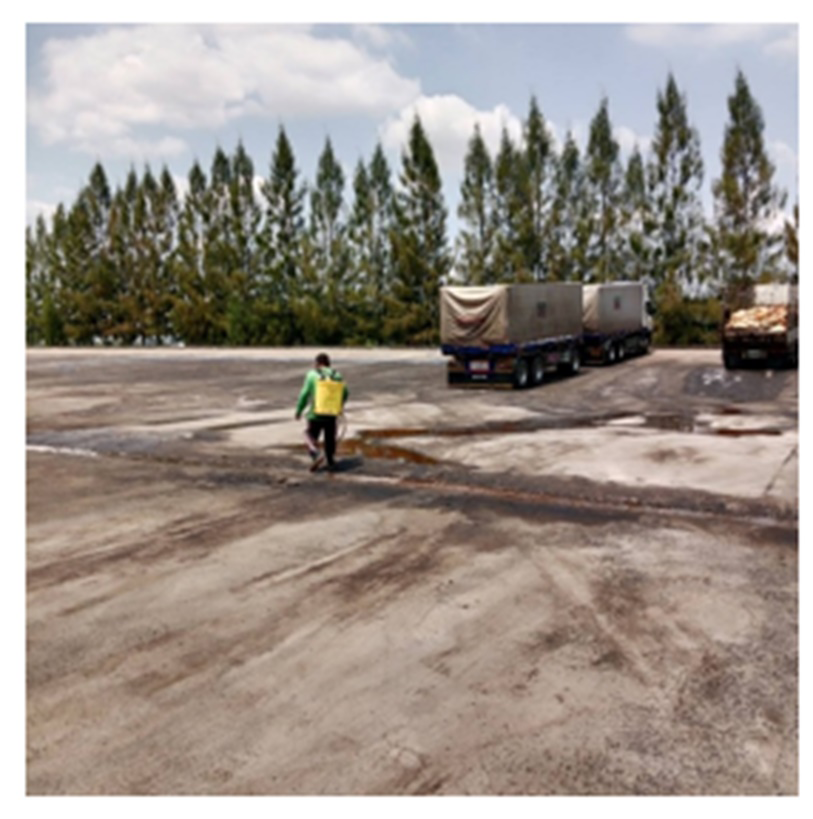
The unpleasant odor from cup lump rubber, which is the company's main raw material, arises from the growth of microorganisms present in the rubber while awaiting use. Storing this raw material in large quantities in outdoor areas intensifies the odor and can easily affect the surrounding community. To address this issue, the company has improved the storage area by utilizing a closed system building that separates designated spaces specifically for storing cup lump rubber. Additionally, the company has mandated regular cleaning of the area containing recently received cup lump rubber from suppliers and consistently sprays wood vinegar and odor treatment solutions made from natural organic substances over the rubber piles. This process is scheduled to occur three times a day as well as every time there is a rubber stockpile turnover activity, to minimize the odor as much as possible.
Odor Management in the Production Process
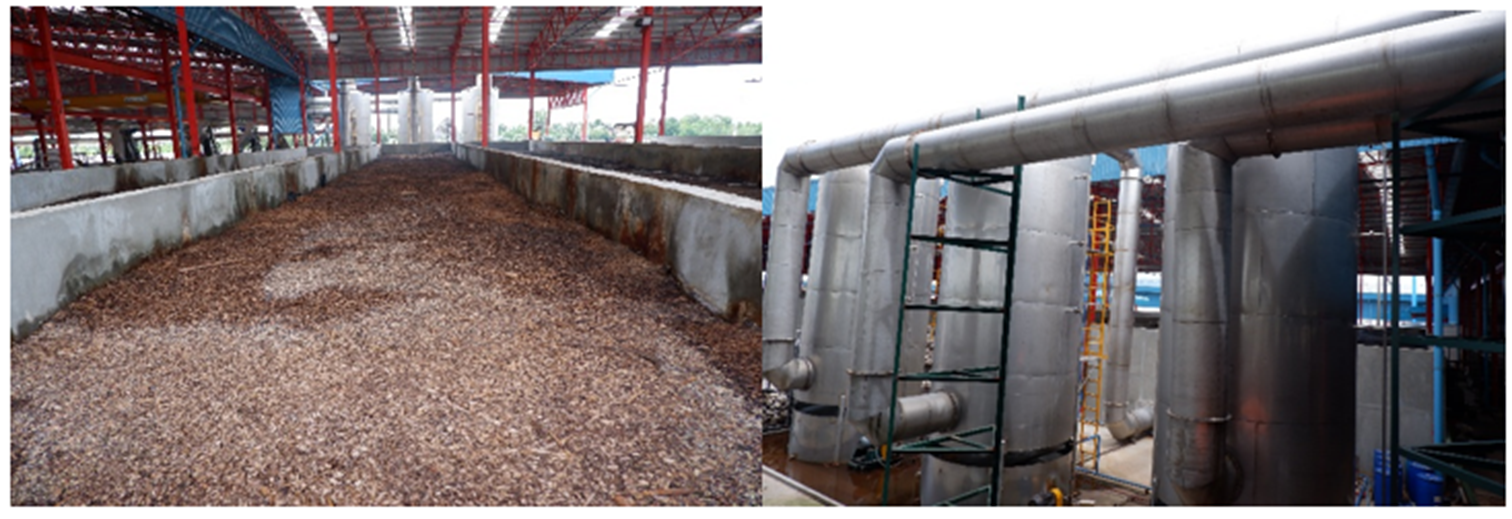
The foul odors from the slab rubber production process mainly occur during the rubber drying stage, which is a source of odors and smoke that may impact the environment and air quality in the surrounding area. The company has installed a wet scrubber air treatment system that effectively captures dust, odors, and smoke from the production process. Additionally, a bio-scrubber system for treating exhaust air has been installed to help eliminate volatile organic compounds and reduce high concentrations of odors. Furthermore, the company has established a routine for regularly cleaning the air duct system according to usage frequency in order to reduce the accumulation of impurities in each section of the duct, thus enhancing the efficiency of the treatment system and effectively managing the release of dust and odors from the system.
Odor Management from Wastewater Treatment.
In addition to the wastewater from the production process that is treated by the company's wastewater treatment system, fresh latex runoff collected from the rubber receiving area is also directed from the transport vehicle parking lot. This runoff contains high levels of impurities and has a strong odor, which may affect the central wastewater treatment system. Therefore, the company has enhanced the management of this wastewater by channeling fresh latex runoff into an anaerobic fermentation process, which is a closed system used as feedstock for biogas production. This process can partially eliminate odors. Additionally, the company has increased the application of organic natural substances in the channels receiving fresh latex runoff in the parking lot area, which helps accelerate the breakdown of proteins that are a significant cause of odor.
Management and Control of Air Quality from Emission Stacks
Stack emissions serve as discharge points for dust, gases, and pollutants into the air during the rubber production process, which can impact air quality and the health of people in the surrounding areas. The company therefore prioritizes the continuous control of stack air quality to ensure that emissions from the production process comply with relevant legal requirements and standards.
The company conducts air quality measurements for emissions from its stacks annually, at least once a year, covering the measurement of air contaminants, particulate matter, and related chemicals in accordance with the standard criteria specified in the Notification of the Ministry of Industry Prescribing the Quantity of Contaminants in the Air Emitted from Factories, B.E. 2549 (2006). With a commitment to operating beyond regulatory standards for the well-being of employees and people in the surrounding communities, the company has set a target that the average value of each measured air quality indicator from the stacks must not exceed 10% of the legally prescribed standard value, which is equivalent to being at least 90% below the standard value, demonstrating a significant commitment to controlling and reducing air pollution beyond the minimum legal requirements.
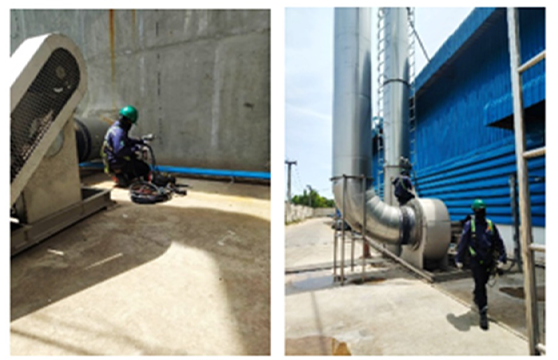
Consequently, the company has taken additional measures by installing a wet scrubber system at the laboratory exhaust stacks to help reduce heat and capture dust particles and chemical vapors more effectively. A bio scrubber system has also been installed additionally at the rubber drying oven area to increase the efficiency of volatile organic compound (VOC) removal and treat high-concentration odors. Furthermore, the company has transitioned from fossil fuels to clean energy, such as using biogas to substitute Liquefied Petroleum Gas (LPG) in the rubber drying process to reduce pollution from fossil fuel combustion. Additionally, the company requires operators to inspect and clean the air treatment systems according to a set schedule once a week, in order to monitor and maintain the air treatment systems to ensure they operate efficiently throughout the year.
The main goals and notable outcomes of the initiatives focused on air quality management are summarized in the table below.
| Long-term Goals 2030 |
2025 Goals |
2025 Performance |
|
|---|---|---|---|
| Complaints regarding air pollution from the community and regulators | 0 | 0 | 0 |
| Average air pollutants emissions below the legal standards | At least 95% | At least 90% | 91.69% - 99.83% |
Measurement of Airborne Pollutants Emitted from the Stack
The measurement of airborne pollutants emitted from the stack of North East Rubber Public Company Limited during August 20–24 and September 9–10, 2024, conducted by C.E.M. Technology (Thailand) Co., Ltd., showed the following results.
| Parameter | Unit | Standard Limit | 2022 | 2023 | 2024 | 2025 |
|---|---|---|---|---|---|---|
| Monitoring Point F1 (Rubber Mixing AB) | ||||||
| Total Suspended Particulates (TSP) | mg/m3 | < 320 | 14.36 | 19.23 | 23.06 | 25.62 |
| Sulfur Dioxide (SO2) | ppm | < 60 | 1.79 | 2.87 | 4.34 | 3.51 |
| Nitrogen Dioxide (NO2) | ppm | < 200 | 25.79 | 11.56 | 22.63 | 15.95 |
| Carbon Monoxide (CO) | ppm | < 690 | 43.16 | 138.68 | 3.46 | 57.36 |
| Hydrogen Sulfide (H2S) | ppm | < 80 | 0.560 | 0.013 | 0.011 | 0.138 |
| 25 measurement points | Unit | Standard Limit | Average Measured Value | Below Standard Value | ||
|---|---|---|---|---|---|---|
| Monitoring Point F1 (Rubber Mixing CD) | ||||||
| Total Suspended Particulates (TSP) | mg/m3 | < 320 | 25.62 | 91.99% | ||
| Sulfur Dioxide (SO2) | ppm | < 60 | 3.51 | 94.15% | ||
| Nitrogen Dioxide (NO2) | ppm | < 200 | 15.95 | 92.03% | ||
| Carbon Monoxide (CO) | ppm | < 690 | 57.36 | 91.69% | ||
| Hydrogen Sulfide (H2S) | ppm | < 80 | 0.138 | 99.83% | ||