In 2025, the company conducted a comprehensive reassessment of its materiality topics. The methodology applied was in full accordance with the GRI Universal Standards 2021 (GRI 3: Material Topics 2021) and the Double Materiality approach as prescribed by the European Sustainability Reporting Standards (ESRS). Furthermore, the process aligned with the OECD Due Diligence Guidance for Responsible Business Conduct. The assessment process encompassed the identification and evaluation of the company’s impacts on stakeholders, society, and the environment (Outward Impact) across the entire value chain, as well as the impacts on the company arising from sustainability-related risks and opportunities (Inward Impact).
The company prioritized its material sustainability topics by considering both Impact Materiality—which examines effects on the economy, environment, and society—and Financial Materiality—which assesses the impacts on the company’s financial performance, financial position, and cost of capital. This Double Materiality assessment effectively reflects the connection between key sustainability issues and risk management, informs corporate strategy, and supports the disclosure of information significant to primary users of financial reports, in alignment with the IFRS Sustainability Disclosure Standards.
Sustainability Materiality Assessment Process
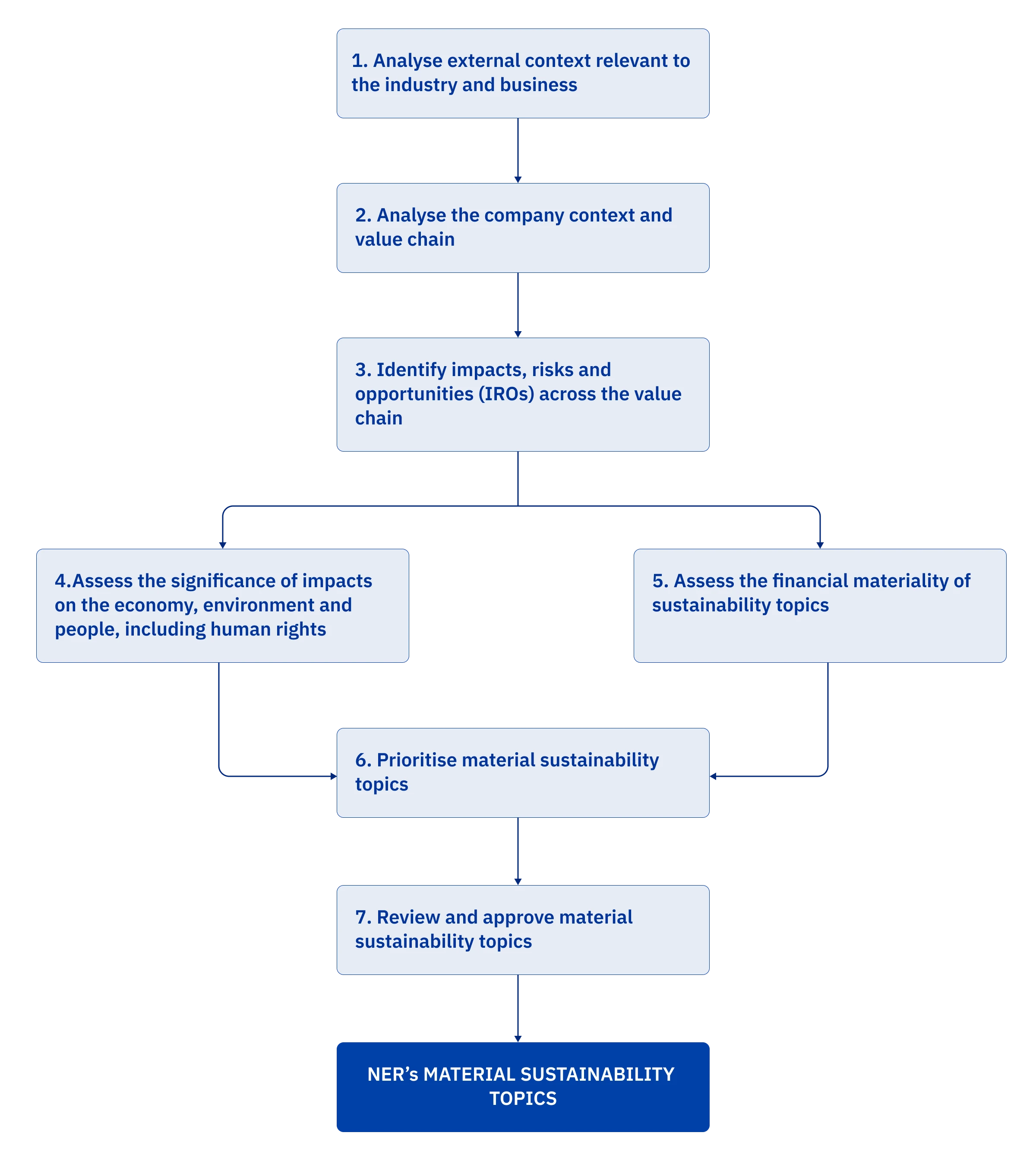
The company studied and analyzed the external context, natural rubber industry trends, and sustainability risks relevant to its business. This analysis considered global shifts, regulations, and challenges across economic, environmental, human rights, and social dimensions at local, regional, and global levels that may impact the company and its value chain. The company identified the following challenges stemming from global trends:
 |
Climate and Resource Stress |
Climate and Resource Stress Fluctuations in humidity levels, water scarcity, outbreaks of plant diseases, as well as the degradation of soil and ecosystems, all directly impact the quantity and quality of raw latex materials. Furthermore, these factors increase the long-term risks of rubber farming, affecting farmers' income and costs, as well as the overall security of the supply chain. |
 |
Geo-economic Volatility |
Geo-economic Volatility Geopolitical tensions, such as border conflicts, and the use of economic measures as international strategies—including stricter trade regulations—pose significant risks to supply chain continuity. These factors lead to high volatility in logistics costs and create operational risks in nearby areas. |
 |
The Human Rights Imperative |
The Human Rights Imperative Heightened global social awareness and increasing stakeholder consciousness growing awareness regarding labor rights, land rights, and the rights of local communities has subjected the industrial sector to more intense pressure and scrutiny from stakeholders. Non-compliance with international standards may significantly impact corporate reputation. |
 |
Standard-Driven Market Access |
Standard-Driven Market Access Stricter safety, quality, and certification requirements from trading partner countries have been heightened standards and rigorous certification requirements imposed by trading partners have created increasingly complex barriers to international trade. This is particularly evident in markets that prioritize sustainability, the environment, labor, and human rights—all of which demand greater transparency and traceability throughout the entire production process across the supply chain. |
 |
ESG and Compliance Demands |
ESG and Compliance Demands Regulatory trends regarding ESG are becoming more rigorous at both national and international levels, driven by new legislation, customer requirements, and capital market expectations. This necessitates that businesses elevate their data disclosure, risk management, and governance systems to be transparent and aligned with international standards. Such actions are essential to maintain competitiveness and ensure long-term market access. |
 |
Intelligent Industrialization |
Intelligent Industrialization The integration of Artificial Intelligence, automation, and advanced data analytics to drive production and operational efficiency—specifically in terms of quality, speed, cost, safety, and sustainability—is significantly transforming manufacturing processes within the natural rubber industry. Consequently, this is reshaping production structures and the competitive landscape of the entire industry. |
 |
Shifting Labor Dynamics |
Shifting Labor Dynamics The reliance on migrant labor, rising wage rates, shifting attitudes toward work, and an aging society have led to increased uncertainty in the manufacturing labor market. These factors may adversely affect the continuity and efficiency of long-term operations. |
 |
Supply Chain Transparency |
Supply Chain Transparency Supply chain transparency is advancing toward a new global market standard. Businesses face increasing pressure from market expectations and international regulations regarding the accuracy and transparency of data throughout the supply chain. Consequently, traceability technologies and digital data systems are being increasingly adopted to verify legal compliance and ensure the sustainability of raw materials and their origins. |
The company analyzed its internal context by considering business practices, short-term and long-term goals, corporate strategy, and value chain structure. This analysis included relationships with key stakeholders, such as suppliers and customers, as well as internal factors that may create risks and opportunities for the company.
Executives at all levels from every department within the company collaborated to identify sustainability-related impacts, risks, and opportunities (IROs) within the business operations. This process involved identifying both negative and positive, as well as actual and potential, impacts on the economy, environment, people, and human rights arising from the company’s activities and business relationships throughout the value chain. Furthermore, sustainability-related risks and opportunities that could affect business operations, financial performance, financial position, and the organization's long-term value creation were identified. The company found 182 impacts and 51 sustainability-related risks and opportunities.
Executives at all levels and subject matter experts from both internal and external departments collaborated to assess the significance of impacts on the economy, environment, and people, including their human rights. The assessment was based on criteria such as severity, scope, likelihood of occurrence, and remediability, as well as the nature of positive and negative impacts occurring or potentially occurring across defined timeframes. This process incorporated feedback from six key internal and external stakeholder groups through two primary activities: (1) In-depth interviews conducted via one-on-one or small-group discussions, both online and on-site, and (2) Questionnaire surveys, with responses collected from a sample size no less than the target calculated using the Taro Yamane formula at an 85% confidence level.
The company grouped its impacts on the economy, environment, people, and human rights into sustainability topics and identified likely material topics by referencing the GRI Sector Standards: GRI 13 Agriculture, Aquaculture and Fishing Sectors 2022 to ensure comprehensive coverage of industry-related issues.
Senior executives then considered the risks or opportunities associated with each sustainability topic that could affect the company’s operational performance, financial position, cash flow, and growth potential over the short, medium, and long term. The financial materiality was assessed based on the severity of potential financial impacts on the company coupled with the likelihood of occurrence. In this regard, the company defined the time horizons for potential impacts as short-term (less than 2 years), medium-term (2–5 years), and long-term (more than 5 years) to determine how different timeframes may affect the severity and materiality levels of financial impacts over time.

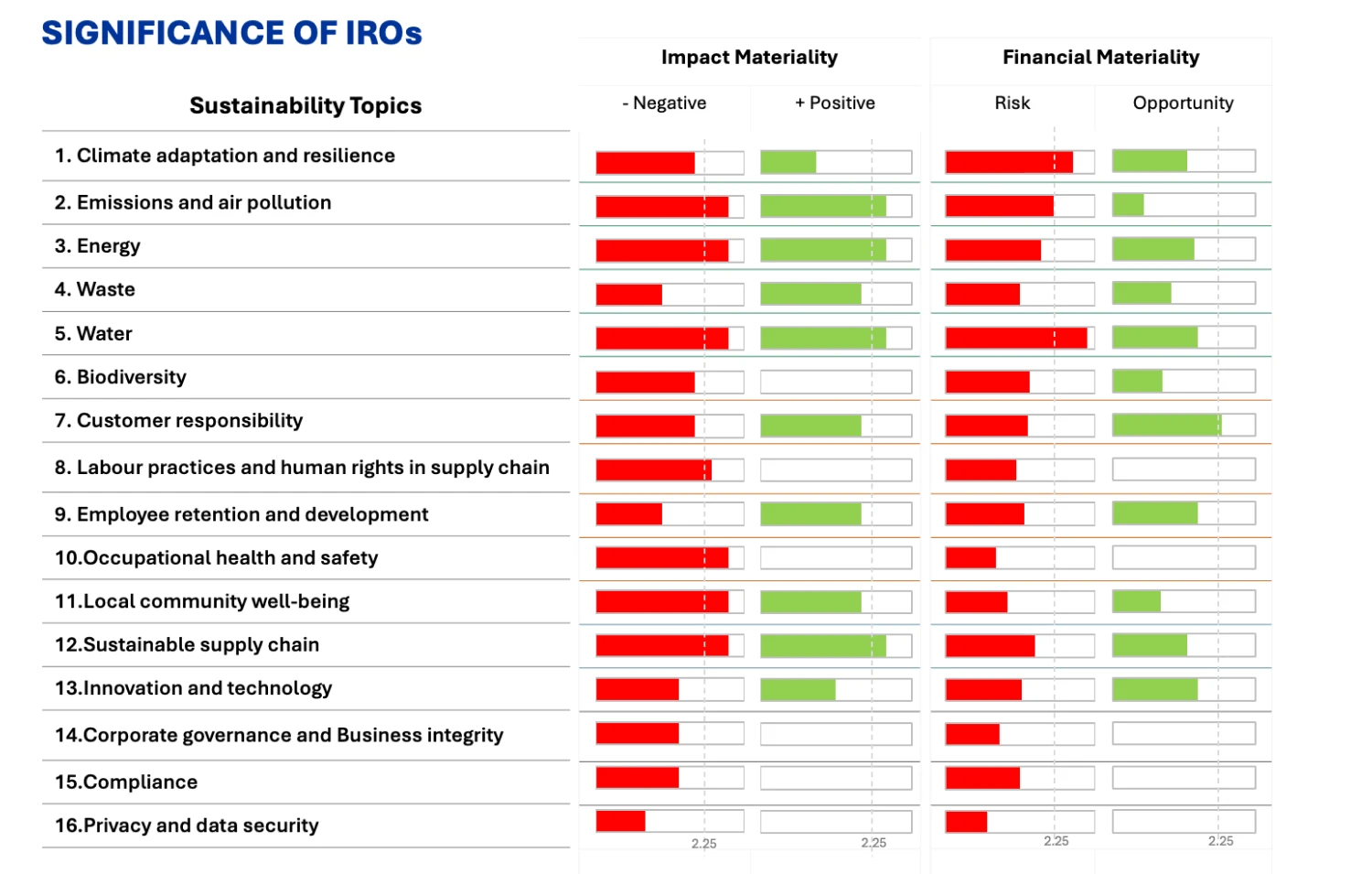
The company established criteria for prioritizing sustainability topics (Materiality threshold) to categorize them into high, medium, and low priority levels. An assessment scale of 0–3 was utilized, with a cut-off point set at 2.25 or higher to identify which sustainability issues are significant enough to be classified as Material topics under the Double Materiality principle. This considers both Impact Materiality and Financial Materiality perspectives; any topic achieving a score of 2.25 or higher in either dimension is considered a high-priority sustainability material topic for the company.
The company invited external sustainability experts from the SET ESG Expert Pool of the Stock Exchange of Thailand, along with industry specialists in the rubber sector, to provide opinions on the materiality assessment process based on Double Materiality principles. This was conducted to ensure the completeness and credibility of the assessment process and to ensure that the prioritization of material sustainability topics appropriately reflects industry context and relevant risks.
The company invited external sustainability experts from the SET ESG Expert Pool of the Stock Exchange of Thailand, along with industry specialists in the rubber sector, to provide opinions on the materiality assessment process based on Double Materiality principles. This was conducted to ensure the completeness and credibility of the assessment process and to ensure that the prioritization of material sustainability topics appropriately reflects industry context and relevant risks.
The company presents the identified material sustainability topics in a materiality matrix to reflect their relative importance, defined as follows:

| High Impact Materiality Topic | Moderate Impact Materiality Topic | Low Impact Materiality Topic |
|---|---|---|
|
1.Climate adaptation and resilience |
4.Waste |
16.Data privacy and security |
|
2.Emissions and air pollution |
6.Biodiversity |
|
|
3.Energy |
9.Employee retention and development |
|
|
5.Water |
13.Innovation and technology |
|
|
7.Customer responsibility |
14.Corporate governance and business integrity |
|
|
8.Labor practices and human rights in the supply chain |
15.Law and regulatory compliance |
|
|
10.Occupational health and safety |
||
|
11.Local Community Well-being |
||
|
12.Sustainable supply chain |
The company identified a total of 16 materiality issues, which were prioritized using a Materiality Matrix. Among these, 9 topics were categorized as having critical impacts. Details on the management of all 16 materiality issues are disclosed in the 2025 Sustainability Report.