Management Approach
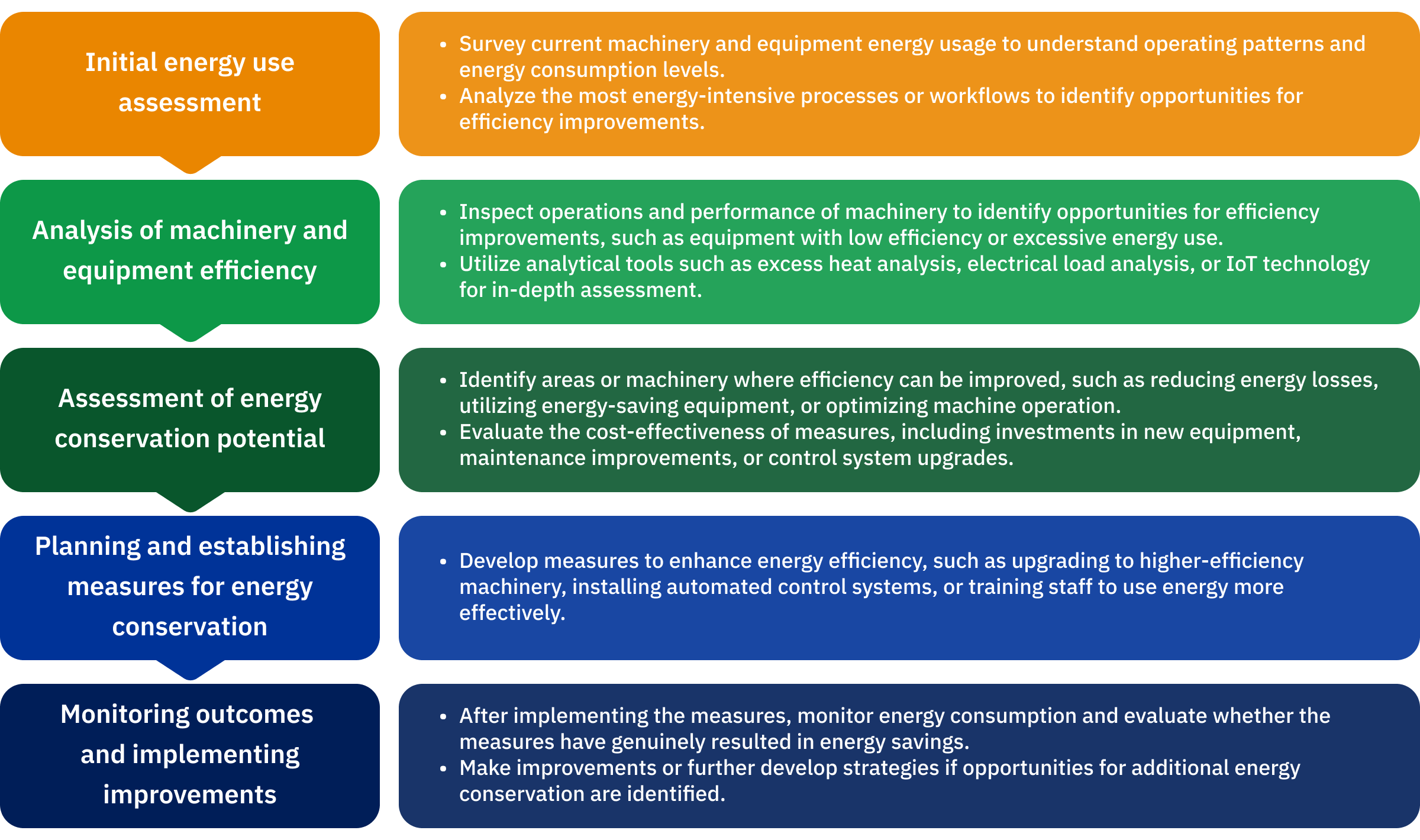
The company defines its energy management approach based on the PDCA (Plan-Do-Check-Act) principles and a process focused on systematically analyzing and improving energy efficiency through the assessment of the potential of significant machinery and equipment to establish appropriate energy conservation measures as follows:

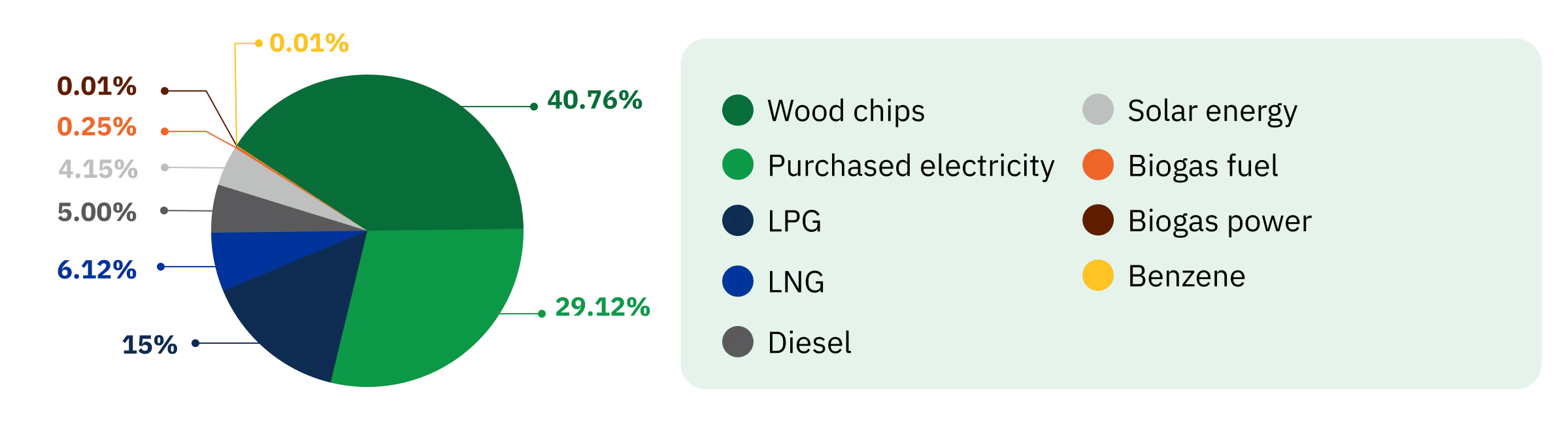
| Core Activities | Non-Renewable Energy Sources | Renewable Energy Sources | ||||||||
|---|---|---|---|---|---|---|---|---|---|---|
| Gasoline | Diesel | LPG | LNG | Electricity purchased from external sources |
Solar energy |
Wood chips |
Firewood | Biogas as a substitute for LPG |
Biogas for electricity generation |
|
| Activities within the Organization | ||||||||||
| Electrical system in the production process |  |
|
|
|||||||
| Thermal energy in production | |
|
|
|
|
|||||
| Transportation of raw materials | |
|||||||||
| Packaging of products | |
|||||||||
| Maintenance of machinery | |
|||||||||
| Lighting electrical system | |
|||||||||
| Office electrical system | |
|
||||||||
| Business travel | |
|
||||||||
| Employee transportation for work | |
|||||||||
| Wastewater treatment system | |
|||||||||
| Landscape improvement | |
|||||||||
| Transportation of raw materials | |
|||||||||
2025 Performance
Improving Energy Efficiency in the Production Process
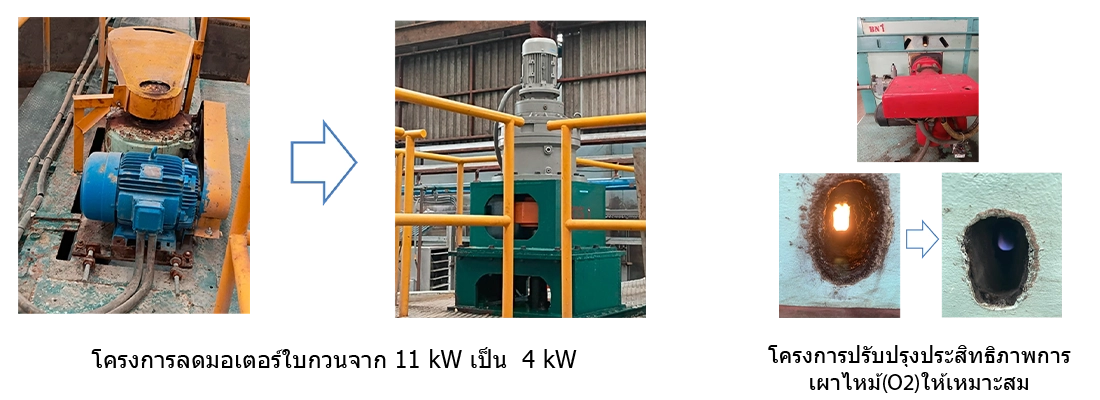
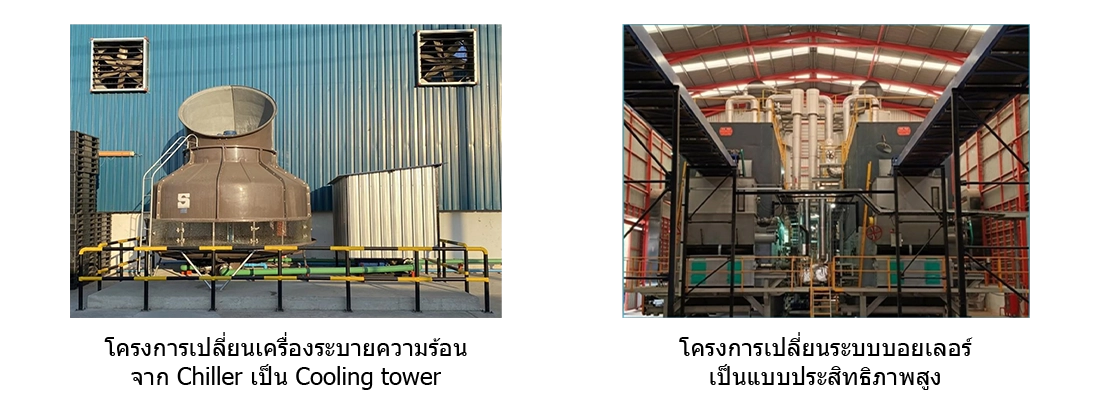
In 2025, the company implemented 4 projects and measures to improve energy efficiency in the production process. These involved equipment modifications in the production line to enable greater energy savings, divided into 2 electrical energy projects: the project to reduce the agitator motor from 11 kW to 4 kW to help lower the electrical power used in the production process to align with the actual workload, thereby reducing hourly electricity consumption during operation and minimizing energy waste from over-specification; and the project to replace the chiller cooling system with a cooling tower to help reduce electricity consumption from the high-energy-consuming compressor-based cooling system to a cooling system that dissipates heat through air and water, which consumes less energy, thus reducing overall electricity usage in the production process.
The other 2 projects were thermal energy projects, including: the project to optimize combustion efficiency (O2) to help ensure more efficient and complete combustion, reducing energy loss from heat and unburnt fuel, which results in lower fuel consumption per production unit; and the project to replace the boiler system with a high-efficiency model to help reduce energy loss in the steam production process, yielding more thermal energy from the same amount of fuel, thereby reducing overall energy consumption and fuel costs.
Based on the performance evaluation of all 4 projects, electricity consumption was reduced by 101.35 megawatt-hours per year, and thermal energy consumption was reduced by a total of 86,247.49 gigajoules. This represents a total GHG emission reduction from all projects equivalent to 293 tCO2e, with total cost savings across all projects amounting to 7.24 million THB.
Energy conservation in offices
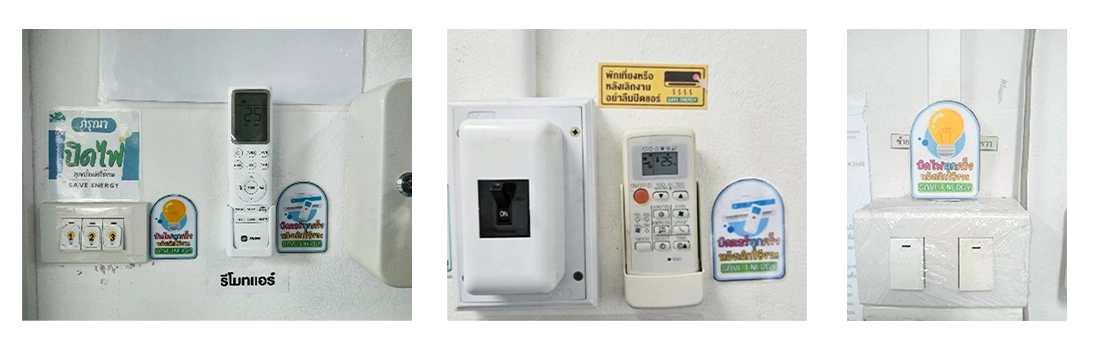
The company has promoted awareness among all employees at both the headquarters in Buriram and the Bangkok office about the importance of energy conservation and the responsible use of natural resources. The following actions were implemented:
- The company adjusted the office air conditioning temperature to no lower than 25 degrees Celsius. Furthermore, the company promoted the practice of keeping doors and windows closed when air conditioning is in use and not bringing in hot or humid items into air-conditioned rooms.
- The company encouraged refraining from using air conditioning before working hours and turning off the air conditioning for one hour during the lunch break.
- The company promoted turning off all office lights during the lunch break.
- The company encouraged employees to use stairs instead of elevators.
- The company ensured that computer screens were turned off when not in use.
- The company encouraged employees to unplug electrical devices after use and chose appliances with a "5-star" energy efficiency label.
- The company transitioned to energy-saving lighting by replacing 46-watt fluorescent bulbs with 18-watt LED bulbs.
- The company maintained and cleaned air conditioning units at least twice a year.
Renewable Energy Consumption in the Production Process
The company promotes the production of renewable energy within its operations, including solar energy and biomass, to replace fossil fuel energy in various activities and processes as follows:
Solar power electricity generation
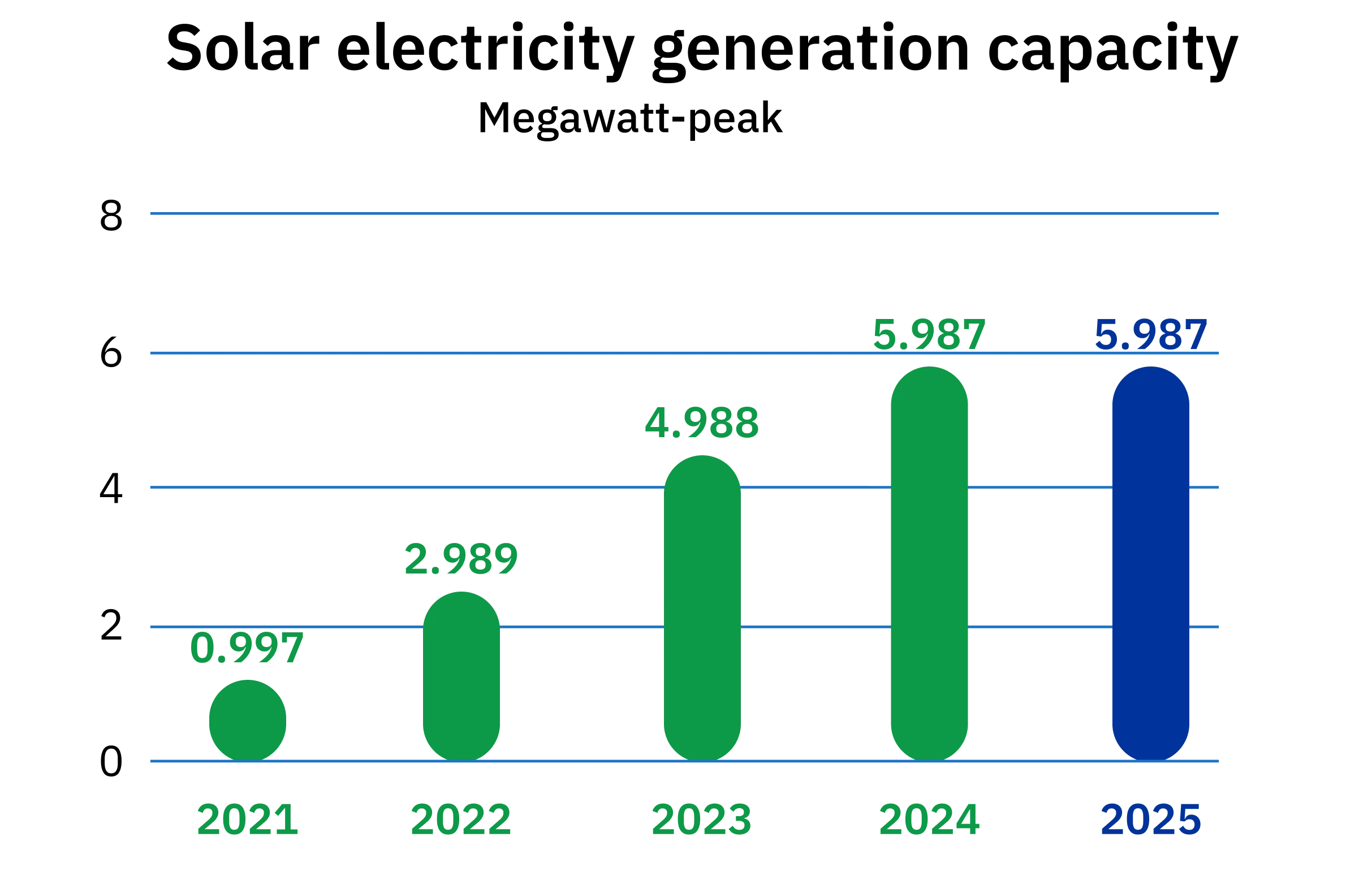
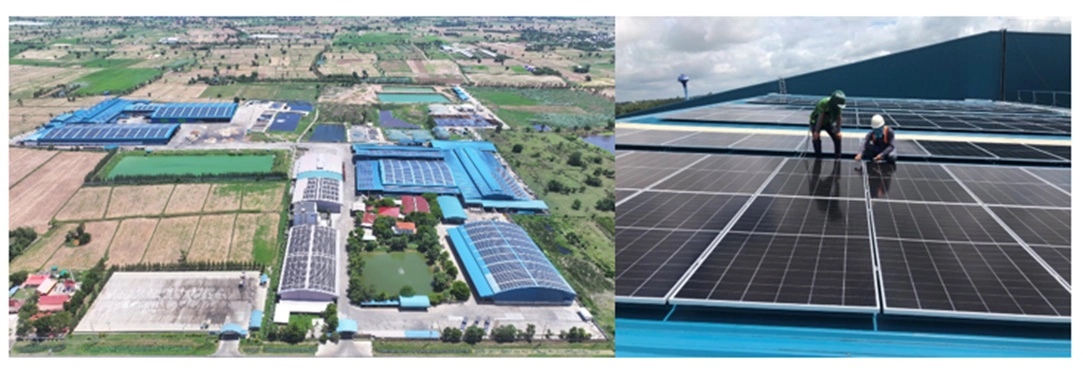
The company has implemented the "NER 360 Degree Clean Energy" project to generate electricity from solar rooftop installations since 2021. In 2025, the company did not expand its solar power generation capacity further from 2024, maintaining a total solar electricity generation capacity of 5.987 Megawatt-peak (MWp). Currently, the company can generate solar electricity to substitute a total of 5,001,623.6 kilowatt-hours of electricity used in the production process, accounting for 12.46% of the total electricity consumption in the production process. This represents a slight decrease of 0.69% from 2024 due to a fire incident that partially damaged the solar rooftop power generation equipment.
| Renewable Energy Electricity Generation Projects | Electricity Produced (Kilowatt-hours) |
Electricity Utilized (Kilowatt-hours) |
Renewable Energy Consumed (Gigajoules) |
|---|---|---|---|
| NER 360 Degree Clean Energy Project Solar rooftop electricity generation Capacity: 5.987 MWp | 5,001,623.6 | 5,001,623.6 | 18,005.84 |
Biogas power generation
The company can generate electricity from biogas to substitute a total of 70,838.96 kilowatt-hours of electricity purchased from external sources for the production process, accounting for 0.18% of the total electricity consumption in the production process.
| Biogas Power Generation Project | Biogas Produced (Cubic meters) |
Biogas Used for Electricity Generation (Cubic meters) |
Electricity Produced (Kilowatt-hours) |
Electricity Utilized (Kilowatt-hours) |
Renewable Energy Consumed (Gigajoules) |
|---|---|---|---|---|---|
| "NER 360 Degree Zero Waste” Project: The Use of Biogas from Napier Grass to Generate Electricity for Internal Organization Use | 80,683.77 | 30,800 | 70,838.96 | 70,838.96 | 255.02 |
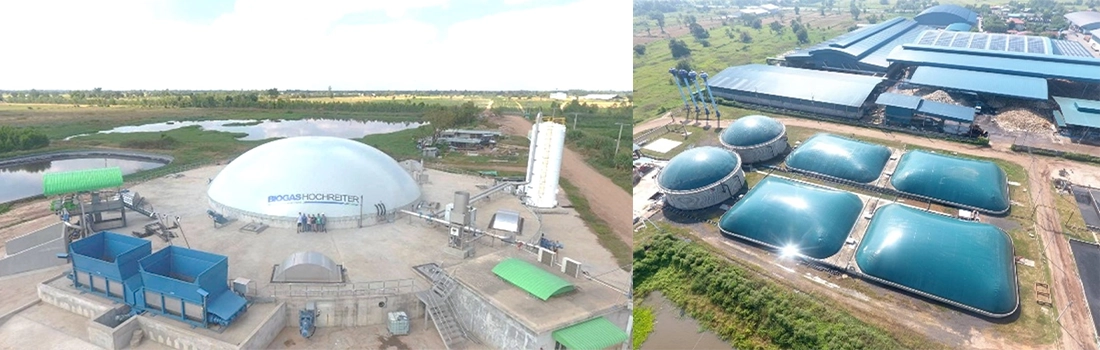
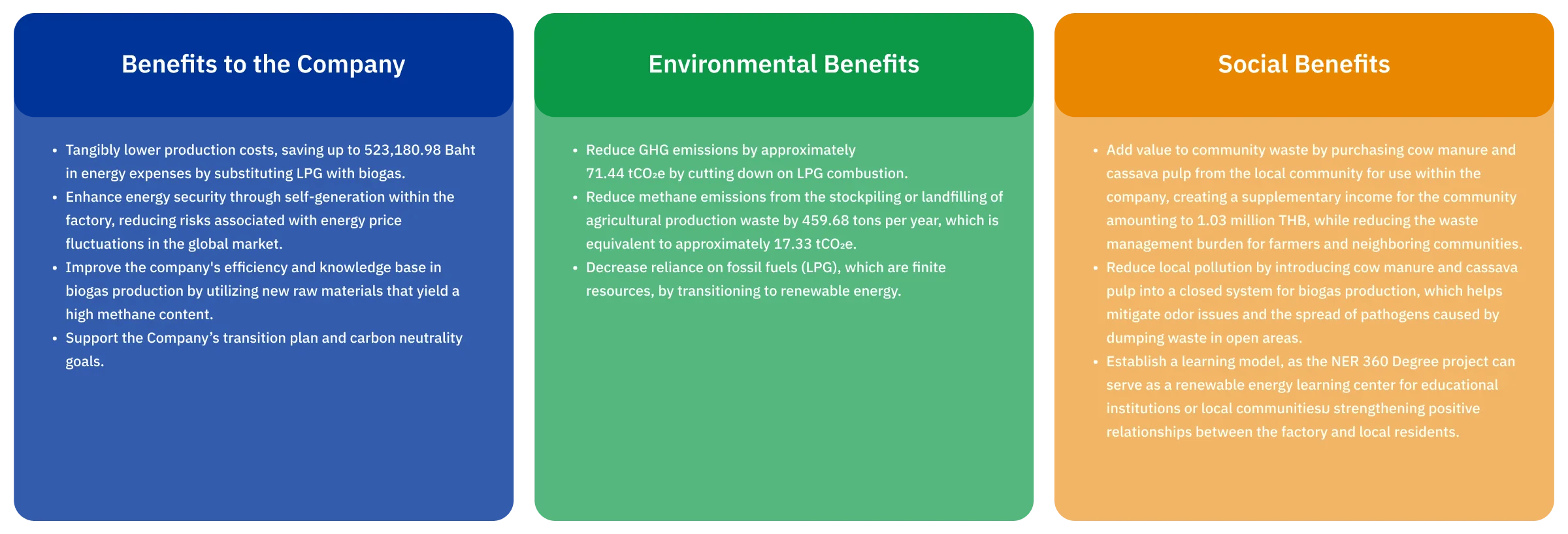
The company has implemented the "NER 360 Degree Zero Waste" project to produce and utilize biogas. In 2025, the company co-digested cassava pulp and cow manure as raw materials with Napier grass to produce biogas, as this combination yields a high methane content and constructively utilizes community waste. The company generated a total of 80,683.77 cubic meters of biogas. Out of this total, 49,883.77 cubic meters were used as fuel in the STR block rubber production process to substitute the use of Liquefied Petroleum Gas (LPG). This initiative successfully reduced greenhouse gas emissions by a total of 71.44 tCO2e and lowered production costs by a total of 523,180.98 THB.
| Renewable Energy Projects to Substitute Liquefied Petroleum Gas (LPG) | Biogas Produced (Cubic meters) |
Biogas Used to Substitute LPG (Cubic meters) |
Renewable Energy Used to Substitute LPG (Gigajoules) |
|---|---|---|---|
| "NER 360 Degree Zero Waste" Project: Utilizing biogas to substitute the use of LPG in the rubber drying process | 80,683.77 | 49,883.77 | 1,071.50 |
Personnel Development in Energy Savings
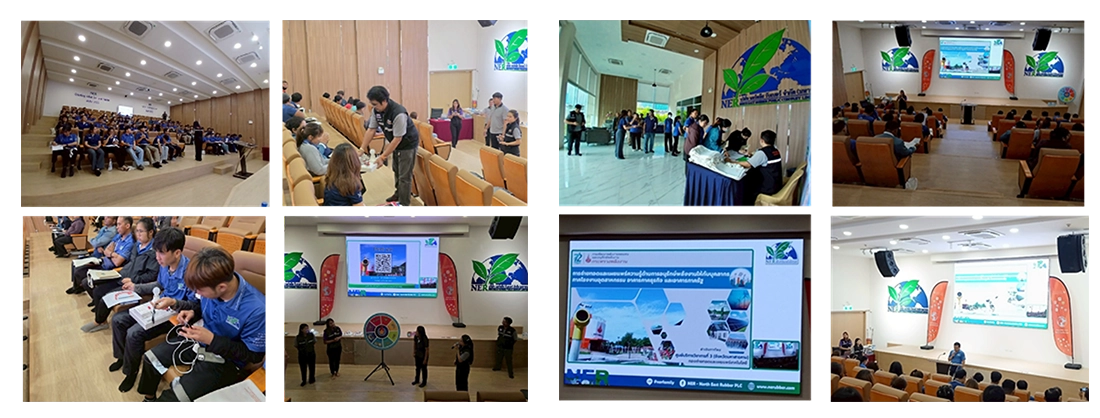
In 2025, the company organized a training course titled "Everyday Energy Saving and Energy Conservation in Industrial Factories" conducted by the Academic Service Center 3 (Maha Sarakham Province), under the Bureau of Technology Transfer and Dissemination, Department of Alternative Energy Development and Efficiency, Ministry of Energy. Held on July 16, 2025, the training was attended by a total of 80 employees representing various departments. The objective was to enhance knowledge, understanding, and awareness of efficient energy consumption. This enables participants to apply the acquired knowledge to their daily lives, actual operations, and industrial factory processes in order to reduce energy consumption, lower operational costs, and support the organization's environmental initiatives.
| Long-term Goals 2030 |
2025 Targets | 2025 Performance | |
|---|---|---|---|
| Energy intensity compared to the baseline year of 2023 | 30% reduction | 10% reduction | 4.76% reduction |
| Percentage of renewable energy consumption to total energy consumption | No less than 60% | No less than 30% | 45.22% |